If you are thinking about buying or selling in Easton, CT, you are looking at a market that does not move like many other Fairfield County towns. Easton is known for larger parcels, limited inventory, and a quieter pace of turnover, which can make the market feel competitive and selective at the same time. Understanding how pricing, land, and timing work here can help you make smarter decisions with more confidence. Let’s dive in.
Easton Housing Market at a Glance
Easton is a small Fairfield County town with a stable, owner-heavy housing base. Official data show 7,636 residents, 2,601 households, and an owner-occupied housing rate of 83.82%. U.S. Census QuickFacts also show that 89.3% of residents lived in the same house one year earlier, which points to lower turnover than you might expect in a more active suburban market.
That stability matters if you are planning a move. In Easton, available homes can be limited simply because people tend to stay put. Recent official estimates also place the median owner-occupied home value in the high $700,000s, reinforcing Easton’s position as a high-value market.
Why Easton Feels Different
Easton is best understood as a rural, preservation-oriented town. The town describes itself that way, and the land-use pattern supports it, with more than twenty working farms and over one third of the land permanently preserved. That creates a very different housing experience from denser nearby markets.
For buyers, that often means more privacy, more natural surroundings, and a stronger focus on setting. For sellers, it means your property is often judged not only by the house itself, but also by acreage, frontage, and the overall feel of the site.
Lot Size Matters in Easton
In many towns, buyers start with square footage and bedroom count. In Easton, lot size and land setting carry more weight than they do in a typical suburban market.
Easton zoning helps explain why. Residence A requires a minimum lot area of 40,000 square feet, while Residence B requires 3.0 acres. Both districts also require generous frontage, which supports the town’s low-density character.
That pattern shows up clearly in active and recent listings. Acre-plus properties are common, with examples including 0.92-acre, 1.24-acre, 1.81-acre, 3-acre, and 4.39-acre parcels. If you are comparing homes in Easton, it is important to evaluate the land as part of the value story, not just as background.
What buyers should notice about land
When you tour homes in Easton, pay attention to more than the house itself. Look closely at:
- Lot size and usable outdoor space
- Privacy from neighboring properties
- Road frontage and placement of the home on the lot
- How the setting affects light, views, and overall feel
- Whether the parcel supports your long-term plans for use and enjoyment
A home with a similar interior size can feel very different depending on how the land is laid out.
Home Styles and Housing Stock
Easton is not a uniform new-development market. A recent market snapshot on Homes.com puts the median year built at 1971, and current listings show a mix of homes from the 1950s, 1960s, and 2000s.
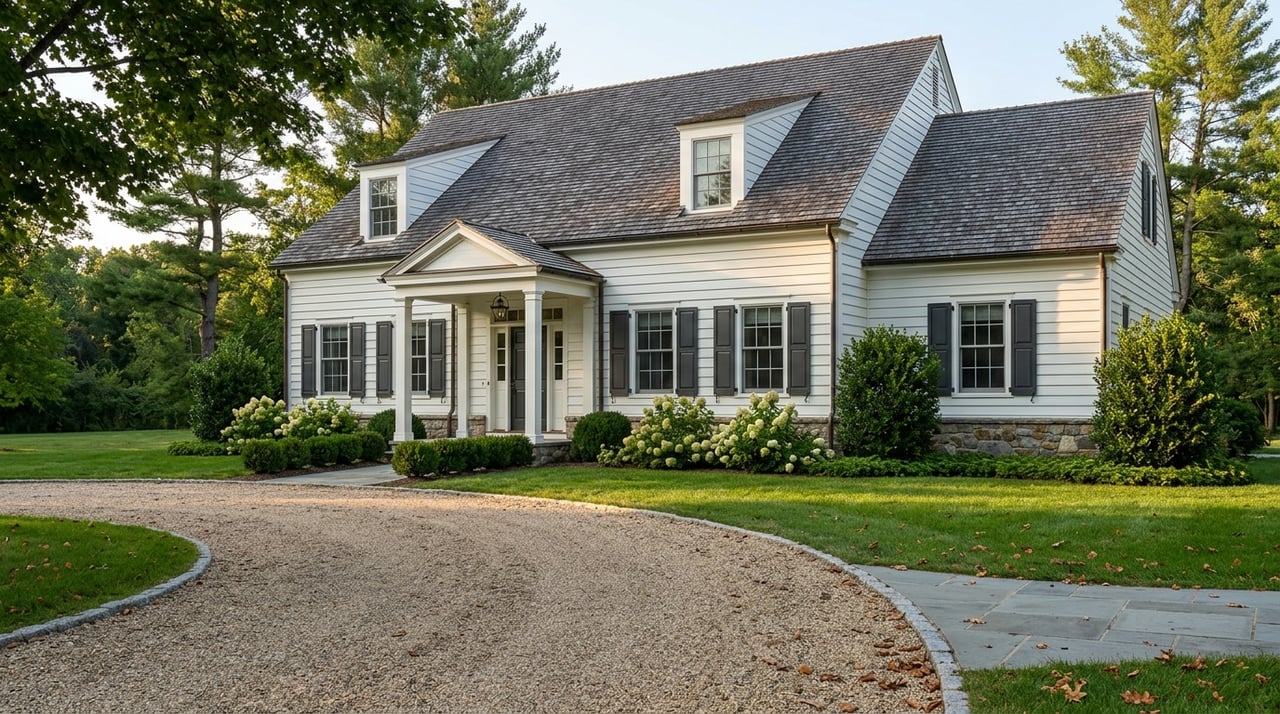
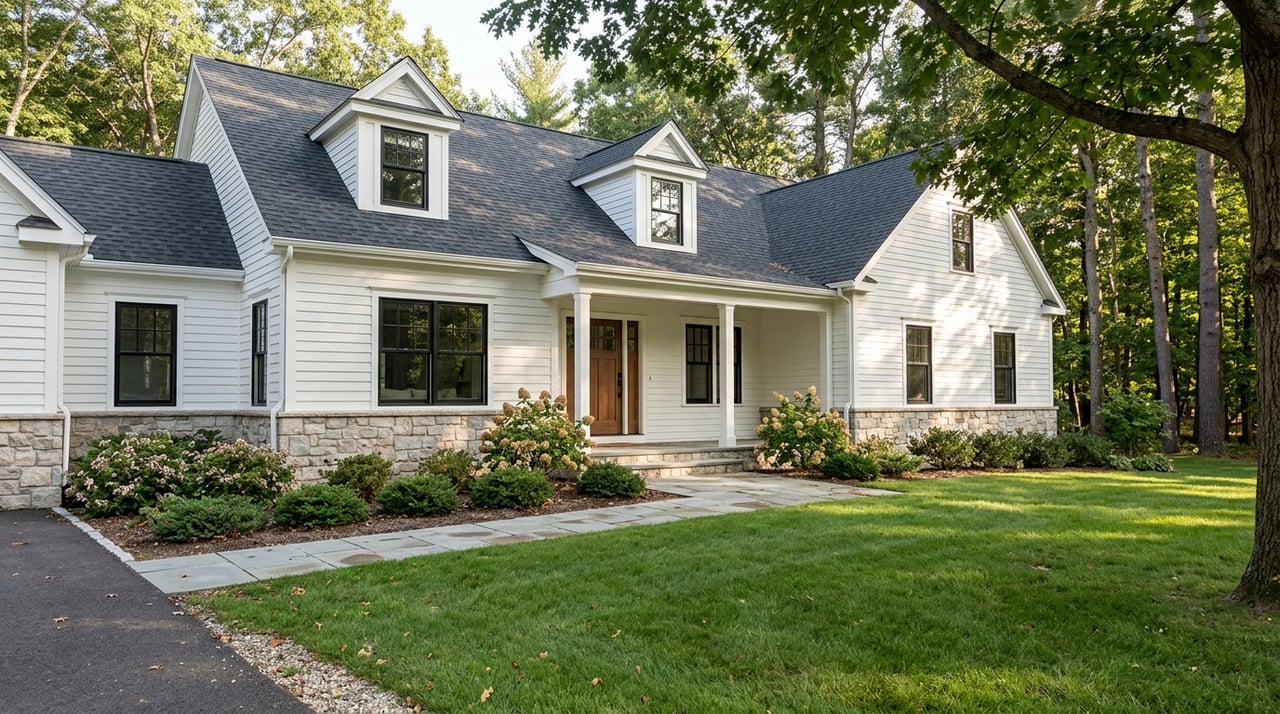
You will often see traditional Connecticut styles here, including capes and center-hall colonials. There are also some contemporary-colonial and updated traditional homes. For buyers, that means Easton often offers character and variety, but it may also require a careful eye for condition, layout, and update potential.
This is where a design-aware approach can be especially helpful. In a market with resale homes from different eras, value is often shaped by how a home lives today, how well it has been maintained, and what improvements may support future enjoyment or resale.
Is Easton a Buyer’s or Seller’s Market?
The clearest answer is that Easton remains tight. In a Q1 2026 brokerage market report, Easton recorded 12 house sales, a median sale price of $1.06 million, and a median time on market of 28 days.
That same report found that 50% of closings were above asking, with a 101% average list-to-sale ratio. At quarter-end, there were 21 active house listings, and inventory was still about 70% below 2019 levels. Redfin’s current Easton page shows about 20 homes for sale and a sale price around $1.1 million, which supports the same overall picture.
For most consumers, this means Easton is competitive, but not careless. Homes still need the right pricing and presentation, and buyers still need to move with purpose when the right property comes up.
What this means for buyers
If you are buying in Easton, preparation matters. Limited inventory and relatively quick market times can put pressure on your search, especially if you are waiting for a very specific type of property.
A few smart buyer strategies include:
- Clarify your must-haves versus nice-to-haves before new listings appear
- Be ready to evaluate land, layout, and condition quickly
- Understand that well-positioned homes may attract strong interest
- Keep a long-term perspective, especially in a low-turnover market
In Easton, patience and readiness often need to work together.
What this means for sellers
If you are selling, today’s market conditions are favorable, but they are not an excuse to skip the fundamentals. Buyers at this price point tend to look carefully at condition, presentation, and how a home compares with nearby alternatives.
Strong results often come from:
- Accurate pricing from the start
- Thoughtful preparation before launch
- Clean, polished presentation that supports the home’s value
- Strategic marketing that highlights both the home and the setting
In a market like Easton, design, layout, and land all influence perception. Small improvements in presentation can make a meaningful difference.
How Easton Compares With Nearby Towns
Easton sits in an interesting position within the Fairfield County market. In the same Q1 2026 regional report, Easton’s median sale price was above Fairfield County’s overall median of $646,000, above Newtown at $579,000, above Trumbull at $677,500, and above Redding at $939,000.
At the same time, Easton came in below Fairfield at $1.175 million and Weston at $1.2 million. That helps define Easton’s place in the local landscape. It often appeals to buyers looking for more land, privacy, and a rural-lifestyle setting, while still staying below the very top of the nearby luxury market.
Key Takeaways for Easton Buyers and Sellers
If you want a simple read on the Easton CT housing market, here it is: inventory is limited, prices are strong, and land plays a major role in value. This is a stable market where people tend to stay, and that low turnover can keep competition firm when the right homes come available.
For buyers, success often comes from being clear, prepared, and open to evaluating a property’s full potential. For sellers, success usually depends on strategic pricing, polished presentation, and telling the right story about both the home and the setting.
Whether you are moving into Easton or preparing to sell, it helps to work with someone who understands that this market is about more than bedrooms and baths. It is about positioning, perception, and the details that shape value over time.
If you are considering a move in Easton or comparing it with nearby Fairfield County towns, Maura Gilson odonnell offers thoughtful, strategic guidance to help you move forward with clarity.
FAQs
What is the current housing market like in Easton, CT?
- Easton remains a competitive, low-inventory market, with a Q1 2026 median sale price of $1.06 million, median time on market of 28 days, and about 20 to 21 homes for sale based on recent sources.
Why are lot sizes important in the Easton, CT housing market?
- Lot sizes matter because Easton is a low-density town with zoning that requires large parcels in many areas, so land, privacy, and setting are key parts of a home’s value.
What types of homes are common in Easton, CT?
- Easton commonly features traditional resale homes, including capes and center-hall colonials, with housing stock ranging from the 1950s through the 2000s and a median year built of 1971.
How does Easton, CT compare with nearby Fairfield County towns?
- Easton is priced above the Fairfield County median and above towns like Newtown, Trumbull, and Redding in recent data, while remaining below Fairfield and Weston.
Is Easton, CT a good market for sellers right now?
- Recent market data suggest favorable conditions for sellers, but strong outcomes still depend on accurate pricing, thoughtful preparation, and polished presentation in a competitive market.