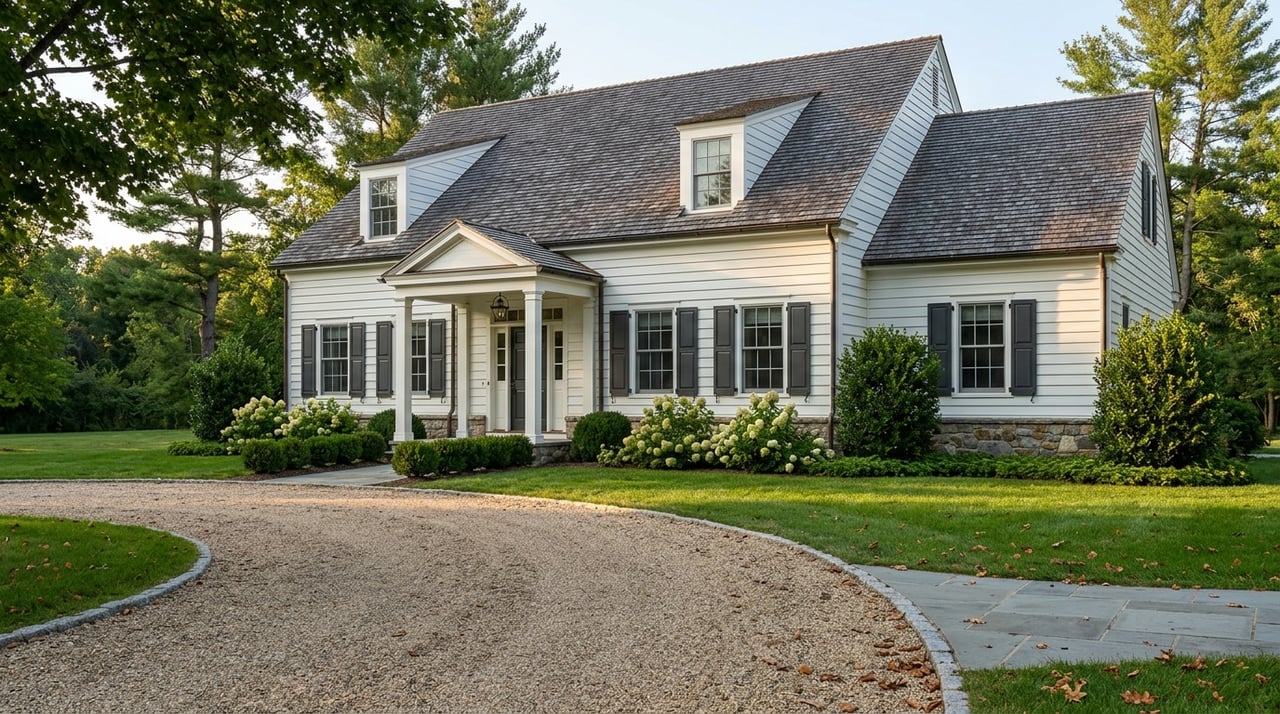
Are you looking for more land, more privacy, and a quieter daily rhythm without giving up Fairfield County access? Easton, CT often stands out for buyers who want a rural setting that still keeps neighboring towns, commuter routes, and everyday essentials within reach. If you are weighing space against convenience, this guide will help you understand what living in Easton really feels like and what tradeoffs come with it. Let’s dive in.
Why Easton Feels Different
Easton is not a typical suburban Fairfield County town. Its identity is rooted in open land, working farms, reservoir property, and a residential pattern that feels spread out rather than built up.
The town has an estimated 2025 population of 7,838 across 27.42 square miles of land. That works out to about 286 residents per square mile, which helps explain why Easton often feels quiet, private, and lightly developed.
Easton’s official town information says more than one-third of its land is permanently preserved. The town also has more than twenty working farms and four reservoirs partly or wholly within town lines, giving it a landscape defined by fields, woods, and water resources rather than a busy commercial center.
Easton’s Rural Lifestyle
If you are drawn to a more grounded, outdoors-oriented routine, Easton offers a lifestyle that is hard to find in many nearby markets. The town’s agricultural identity is not just branding. It is part of everyday life.
The Agricultural Commission describes the entire town as functioning like a farmers market. Local farms and stands offer fruits, vegetables, eggs, dairy, meat, honey, flowers, Christmas trees, and equine services, with examples including Silverman’s Farm, Sherwood Farm, Sport Hill Farm, Sabia Tree Farm, Maple Row Growers and Tree Farm, Aspetuck Valley Orchard, and Snow’s Farm.
Easton is also known for its seasonal farm culture. The town’s agricultural materials call it the Christmas Tree Capital of Connecticut, reflecting its many tree farms and cut-your-own traditions.
Outdoor Space and Natural Setting
Easton’s appeal goes beyond farms. Open space is a major part of how the town functions and feels.
The town’s open-space planning highlights the Mill River as an important cold-water trout fishery and identifies preservation around the Easton Lake Reservoir as a priority. Easton also describes itself as a guardian of the region’s drinking water supply, which reinforces how closely the town’s character is tied to land and water protection.
For recreation, Trout Brook Valley State Park Reserve in Easton is listed by Connecticut DEEP for hiking and hunting. Taken together, these features create a setting where woods, streams, and preserved land are a visible part of daily life.
What Housing Looks Like in Easton
Easton is a high-ownership market with home values that reflect its Fairfield County location and limited rural inventory. If you are considering a move here, it helps to understand that Easton is generally a buy-first market rather than a rental-first one.
According to Census QuickFacts, 88.1% of housing units are owner-occupied. The median value of owner-occupied homes is $783,100, while the median gross rent is $3,205.
Those numbers point to a market where ownership is the dominant pattern. For many buyers, Easton is less about finding a wide range of housing types and more about finding the right property that aligns with your priorities for land, privacy, layout, and long-term livability.
Practical Costs to Plan For
Purchase price is only one part of the equation in Easton. Property taxes should be part of your monthly budgeting from the start.
The town tax collector lists Easton’s FY 2025-2026 mill rate at 31.00 mills. Since Connecticut property taxes are expressed in mills, buyers should model taxes alongside mortgage costs, insurance, and maintenance when comparing Easton with nearby towns.
This is especially important in a market where larger lots and higher-value homes can shift carrying costs in a meaningful way. A thoughtful cost review can help you compare Easton clearly with places like Fairfield, Weston, Redding, or Monroe.
Schools and Daily Routines
For buyers who are comparing town structures, Easton has a smaller-scale setup than many larger suburban districts. The town lists Samuel Staples Elementary School and Helen Keller Middle School in Easton.
For high school, Easton shares Joel Barlow High School with Redding through Regional School District 9. That regional structure is part of the town’s practical character and can be helpful to understand as you compare local options.
Beyond schools, daily life in Easton tends to be organized around driving rather than walking from place to place. That shapes everything from errands to after-school routines to weekend plans.
Commuting From Easton
Easton works best for people who are comfortable with a car-oriented lifestyle. The town’s regional analysis describes Route 59 as a key corridor that connects neighborhoods, the middle school, community center, village center, local businesses, agricultural uses, the Merritt Parkway, and points south.
CTDOT road-safety materials for Easton note low-to-moderate traffic, no sidewalks in the study area, and limited multimodal connectivity. In plain terms, that means Easton often feels peaceful and uncrowded, but it is not built around walkability.
The Census reports a mean commute to work of 32.9 minutes. For many residents, that suggests the tradeoff is worth it: more space and a more rural home base in exchange for a regional drive.
Shopping, Dining, and Convenience
Easton is best understood as a base town rather than a town with a dense retail center. You can find local spots such as Greiser’s Coffee & Market and The Olde Blue Bird Inn Restaurant, but the town has only a small amount of commercial property.
That means broader shopping, dining, and service options generally come from neighboring Fairfield County towns. For some buyers, that is a drawback. For others, it is part of the appeal because Easton remains quieter and less built up.
If you want to step out your front door and walk to a long list of stores and restaurants, Easton may not be the best fit. If you prefer privacy and do not mind driving for errands, it can be a compelling choice.
Who Easton Often Fits Best
Easton tends to appeal to buyers who value setting as much as square footage. If your ideal home life includes more land, mature trees, outdoor space, and a calmer pace, Easton deserves a close look.
It can be especially attractive if you are comparing Fairfield County towns and trying to balance rural character with access to surrounding hubs. Easton is about 25 miles west of New Haven and 50 miles northeast of New York City, with neighboring towns including Fairfield, Weston, Redding, Monroe, Trumbull, and Newtown.
In other words, you are not isolated. You are choosing a quieter home base within a connected region.
The Main Tradeoff to Consider
The central question with Easton is simple. Do you value privacy, land, and a rural routine enough to accept a more drive-dependent lifestyle?
For the right buyer, that answer is yes. Easton offers a distinctive combination of preserved land, farm culture, owner-focused housing, and Fairfield County access that can feel deeply appealing if your priorities lean toward space and setting.
If you are exploring Easton, it helps to look beyond surface-level convenience and focus on how you want your day-to-day life to feel. That is often where the right decision becomes clearer.
If you want thoughtful guidance as you compare Easton with other Fairfield County towns, Maura Gilson odonnell offers a calm, strategic approach grounded in local knowledge, design awareness, and long-term value.
FAQs
What is Easton, CT like for everyday living?
- Easton is a rural Fairfield County town with preserved land, working farms, reservoir areas, and a quiet residential feel rather than a dense suburban or urban pattern.
Is Easton, CT a walkable town?
- Easton is largely car-oriented, with limited multimodal connectivity and no sidewalks in the CTDOT study area referenced in the research.
What is the housing market like in Easton, CT?
- Easton is an owner-heavy market, with 88.1% owner-occupied housing, a median owner-occupied home value of $783,100, and a median gross rent of $3,205.
What schools serve Easton, CT?
- Easton includes Samuel Staples Elementary School and Helen Keller Middle School, and it shares Joel Barlow High School with Redding through Regional School District 9.
What should buyers know about Easton, CT property taxes?
- Easton’s FY 2025-2026 mill rate is 31.00 mills, so buyers should include property taxes in their full monthly cost comparison when evaluating homes.
Is Easton, CT good for buyers who want more space?
- Easton can be a strong fit if you want more privacy, larger lots, and a rural setting, and if you are comfortable with driving for errands and regional commuting.