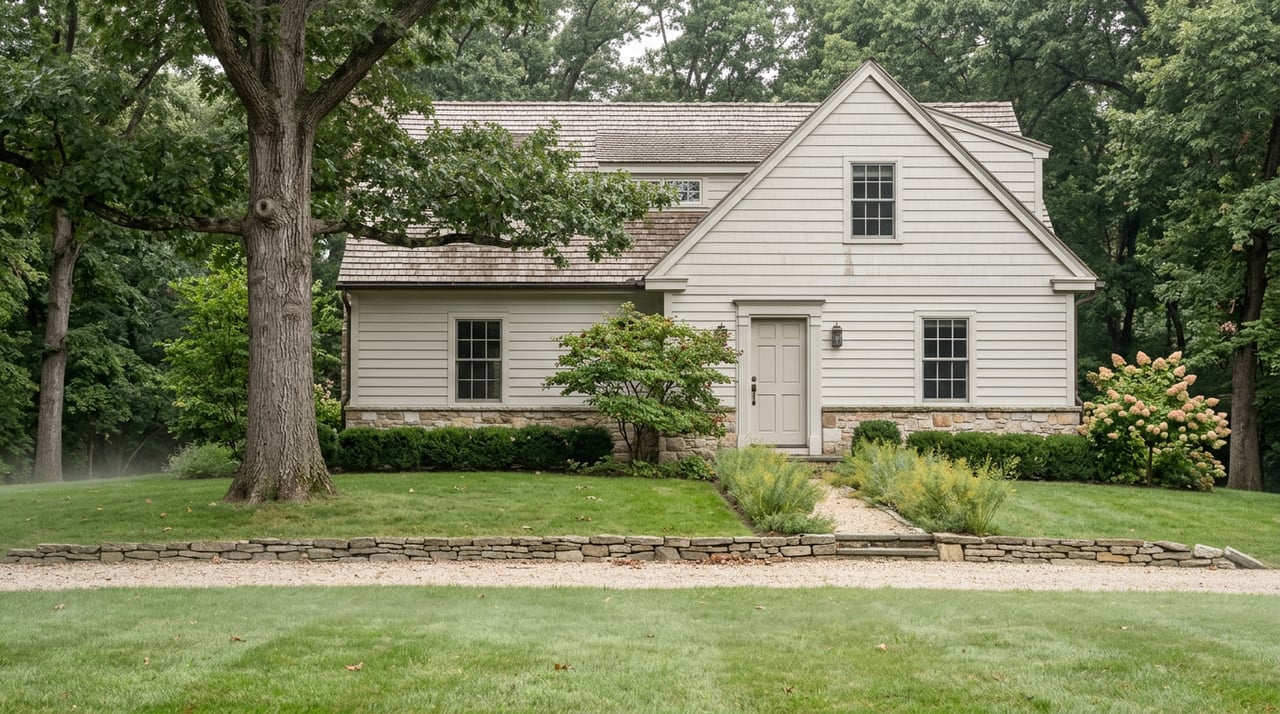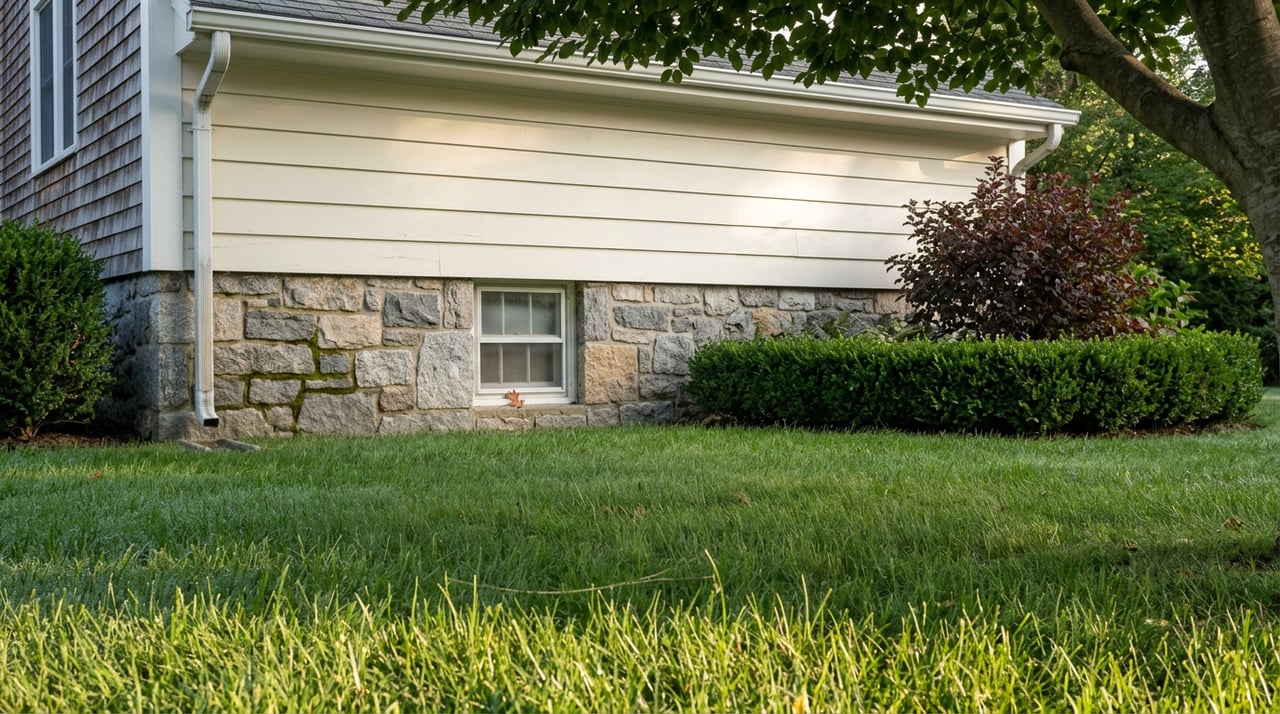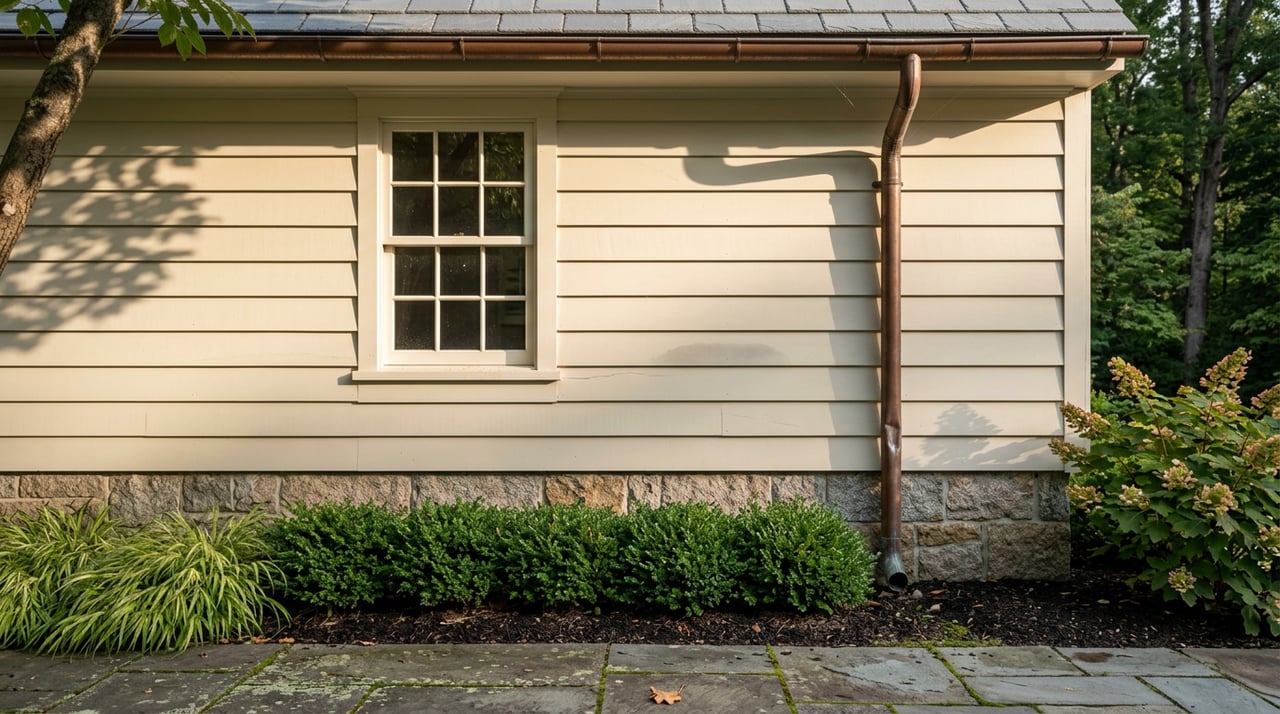
The house shows beautifully. Fresh paint, staged bedrooms, a kitchen that photographs well. Then the inspector spends forty minutes in the basement with a flashlight, another twenty in the attic, and by the time the report lands in the buyer's inbox, the negotiation you thought you were having has quietly become a different one.
In New Canaan, this pivot happens more often than sellers expect, and it happens for reasons that are specific to the town's housing stock. Antique Colonials off Oenoke Ridge, mid-century Modernists in the Silvermine area, and 1980s builds on two-acre zoning lots all carry systems that a generalist inspection guide will not prepare you for.
The market has split, and condition is where the split happens
Two data points from the last twelve months tell the story. Coldwell Banker reported that the median sale price for single-family homes in New Canaan reached $2,550,000 in June 2025, homes sold for 106.7% of list price on average, and properties were moving in 21 days. Six months later, a different picture: homes were selling in around 159 days with a median sale price of $1.4M in the March 2026 read.
Both are true. The market isn't one market. Turn-key homes with clean systems trade quickly and above ask, while homes with dated mechanicals or deferred maintenance sit. Buyers were willing to stretch for homes that combined condition, location, and commuter convenience, and location, condition, and proximity to transit drove pricing above the market trend line.
The inspection is where "condition" stops being a marketing word and becomes a line-item negotiation. For a seller preparing to list, the pre-market weeks are the last window to move items from the buyer's punch list to yours, at your contractors and your timeline.
The disclosure form is doing more work than it used to
Before an offer is signed, Connecticut requires you to hand the buyer a Residential Property Condition Report. The current version was revised in July 2025, runs nine pages, and asks 65 questions about the property, from the foundation to the roof, the well to the septic, and the FEMA flood zone.
Sellers often ask whether they can skip it and absorb the penalty. The math looks tempting until you read the statute closely. Under Connecticut General Statutes § 20-327c, if a seller fails to provide the report before a buyer signs a purchase agreement, the buyer is entitled to a $500 credit at closing.
The $500 is the visible cost. The invisible cost is larger. The bigger risk is not the $500, it is liability for any material defect later found to have been concealed, and Connecticut courts have allowed misrepresentation claims even when the form was completed.
A thoughtfully completed disclosure, delivered with the listing rather than at contract, also does something the statute does not require: it changes the tone of the inspection. A properly filled out form is your best form of leverage when negotiating inspection items, because if you disclosed the problem and gave the buyers the report, you have the upper hand in negotiating that particular item with them. The buyer already priced the known issue into the offer. The inspector rediscovering it is not new information.
Five systems that surface in almost every New Canaan report
These are not exotic findings. They are the ones a seasoned Fairfield County inspector expects to write up in this town, and they are the ones that most often trigger a renegotiation.
1. Federal Pacific and Zinsco electrical panels
Homes built or renovated in the 1960s and 1970s across New Canaan frequently carry panels from two manufacturers that no longer meet current expectations. Federal Pacific and Zinsco panels, once common in this region, are considered outdated and potentially problematic by today's standards, and an inspector will flag these for further evaluation by a licensed electrician.
The replacement itself is not enormous. What sellers underestimate is the timing: a buyer who sees "FPE panel" in a report may ask for a licensed electrician's letter before the appraisal is even scheduled, and pulling that together during due diligence adds a week to the calendar you no longer control.
2. Buried and abandoned oil tanks
Oil heat is common in older New Canaan homes, and the archaeology in the yard matters. Heating systems in Fairfield County frequently run on oil, and older oil tanks buried underground represent a specific liability. If a home has an in-ground oil tank that has been decommissioned or abandoned, buyers will want documentation that it was properly removed and tested. Active in-ground tanks warrant a separate evaluation by an environmental specialist. This is a detail that can have notable financial and legal implications if not addressed before closing.
If your home has had oil at any point in its history, locate the removal or abandonment paperwork before you list. If you cannot find it, order the environmental scan yourself. A buyer's environmental consultant, hired under time pressure, will not deliver the same result as your own on your terms.
3. Radon
Radon is a Connecticut fact of life, not a rare finding. Radon is common in Connecticut's geology and requires a separate test kit or continuous monitor. A pre-listing radon test costs less than most kitchen fixtures, and if the result is elevated, a mitigation system installed on your schedule is a routine job. Discovered during buyer due diligence, the same finding becomes a stall.
4. Well yield and water quality
Two-acre and four-acre zoning across much of New Canaan means many properties draw from a private well. Buyers will look at three things, not one. Yield in gallons per minute, potability, and general water chemistry.
The chemistry piece is the one that surprises sellers. If the natural water is aggressive, meaning low in pH and other factors are present, that condition needs to be corrected via a treatment system in order to avoid the copper plumbing in the home from getting damaged and failing, and green residue in the toilet tank is possibly a sign that the copper plumbing may be negatively affected by the water quality. Green staining that a homeowner has lived with for a decade reads to a buyer as a plumbing bill in year one.
5. Septic capacity relative to what the house has become
This is the finding that most reliably derails deals on renovated antique homes. The town has been explicit about it. Per the New Canaan Health Department, any addition to your house, even if the footprint is not changed, will probably require testing for a code compliant septic system, and this may include finishing the attic or basement or increasing the living space. Additional improvements such as swimming pools, garages, pool houses, sheds or modifying the soil may require testing as of August 1998, per Section 19-13-B100a of the Public Health Code.
If a previous owner finished the basement or added a bedroom without updating the septic design, a buyer's attorney will find it. The town file is public, the buyer will pull it, and the conversation you have with the buyer's counsel will be about system size, not about your kitchen renovation.
Sequencing the work
The order matters as much as the list. Sellers who do this well tend to move in roughly this sequence:
- Pull the town Health Department file on your property. New Canaan makes this straightforward. Health department files are always available for viewing on the public computers located outside the Land Use Offices in the hallway and digitally on the town website via "documents on demand" under agenda/minutes.
- Order a pre-listing inspection from a Fairfield County inspector who knows the housing stock. Firms such as Total Home Inspection and HomeSpec work extensively in New Canaan and Darien and are familiar with what turns up here.
- Address the two or three findings most likely to threaten financing or trigger environmental review: panels, tanks, septic non-conformity.
- Complete the disclosure report with your inspection report open next to you. Answer questions in the same language the buyer's inspector will use.
- Attach the disclosure to the MLS listing so it is in front of buyers before they write.
Done in that order, the inspection becomes a confirmation rather than a surprise, and the negotiation shifts from repairs to price.
A short FAQ
Should I make repairs before listing, or offer a credit at closing? It depends on the item. Anything that could affect a buyer's financing, insurance, or appraisal is worth completing in advance. Cosmetic and preference-driven items are usually better handled as credits, since a buyer will rarely value your finish choices at what you spent.
Does a pre-listing inspection have to be disclosed? Any material defect you learn about is disclosable regardless of how you learned it. The practical answer is that a pre-listing inspection surfaces the same information a buyer's inspection would, and it gives you a chance to address or price for it first.
Are Modernist and antique homes at a disadvantage in this market? Not inherently. Buyers seek out both. The disadvantage appears when systems have been deferred and the presentation asks a full-condition price for a partial-condition house. Priced and prepared honestly, distinctive homes in New Canaan continue to attract their specific buyer.
If you are considering a New Canaan sale in the next several months and want a candid read on where your home sits on the condition-driven pricing spectrum, Maura Gilson O'Donnell offers pre-market walkthroughs that pair presentation planning with a practical view of what the inspection will surface. Let's start a conversation before the listing photos are on the calendar.