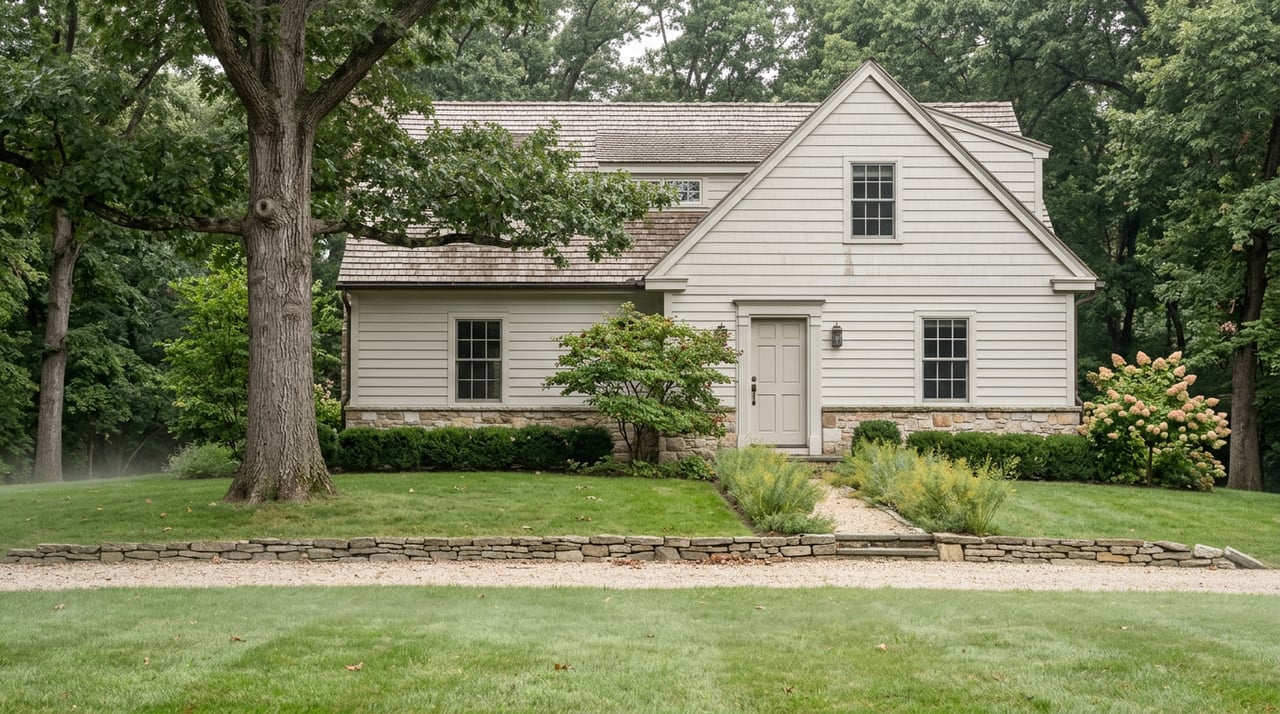
Drive Route 57 through the center of Weston and you will pass a library, a firehouse, a school, and long stretches of stone wall and tree line. No storefronts stack up the way they do a few miles south in Westport. No corner where three restaurants compete for a Friday table. If you are new to town, or just visiting, the natural conclusion is that there is nothing here to do on a given evening.
That conclusion is wrong, but it is wrong in an interesting way. Weston's public life does not organize itself around a place. It organizes itself around a date. The town shows up on a schedule instead of a street corner, and if you do not know the schedule, you will drive right past everything that matters.
This week gives a clean example of how that works.
Friday, August 28: The Farm Turns Into the Town Square
Lachat Town Farm, a working farm on the Julia Lachat Preserve, hosts a farmers market on the last Friday of the month from June through September, running 4 to 8pm. According to the farm's own event calendar, the market posted for Friday, August 28 is the final one scheduled before the season turns toward fall events, including one called The Longest Table on September 13.
Calling it a farmers market undersells what actually happens. Yes, there are farm stands and produce. But the evening runs closer to a pop-up town fair, food trucks parked next to a live music setup, vendors selling honey, soap, jewelry, and clothing alongside the vegetables. Recent market rosters have included Baked in Weston, a Weston bakery turning out handcrafted sourdough in flavors from country and rye to chocolate and walnut cranberry, all made with a natural starter rather than commercial yeast. Grumpy Dumpling shows up with hand-folded dumplings made from organic meat and local vegetables, sold cold to cook at home or picked up hot at the market. Momu, an artisanal ice cream and sorbet shop based in Westport, scoops flavors built around whatever is fresh that week. RastaRant, founded by Vegan Master Chef GiGi Lawrence, brings Caribbean cooking rooted in the cuisine she started learning at age eight in Kingston, Jamaica. Agape Premium sells single origin Greek olive oil sourced from family groves in Messinia, run by a certified olive oil sommelier who will happily explain what separates real extra virgin from the supermarket version. Honey Bee Flower Truck rounds out the lineup with locally sourced bouquets, and Palmer Pages, a Weston business, sells "blind date with a book," pre-loved books wrapped so you cannot see the cover until you buy it.
The logistics matter if you are actually going. Lower lot parking is limited and costs $20, refunded in tokens usable toward most vendor purchases. Free parking is available in the upper lot at 1 Ladder Hill Road South, and overflow parking sits at the Weston Field Club with a free shuttle running to the farm. None of this is complicated once you know it, but nothing about the farm's driveway tells you any of it in advance.
The point is not the market itself so much as what it reveals about Weston's rhythm. For one Friday evening a month, a working farm becomes the most populated commercial space in town, and then it reverts to fields and quiet the rest of the month.
Sunday Afternoons at the History Center
The same pattern shows up a few miles away. The Weston History & Culture Center has kept its exhibit open on select Sunday afternoons this summer, from 1 to 4pm, a window that appeared on the town's community calendar in early August and again later in the month. It is a small, specific window, not a standing open-door policy, which means the building functions the way the farm does: closed and easy to overlook most of the time, then briefly a destination.
For residents who have lived in Weston for years without ever walking through it, that Sunday slot is the practical opening. It costs nothing to check the town's community events calendar before Sunday to confirm the exhibit hours are running that week, since the schedule is not fixed to every Sunday of the summer.
The Trail Window, Before the Bugs Win
Weston's two large preserves, Devil's Den and Trout Brook Valley, follow a version of the same logic, except their calendar is set by insects rather than by a posted hour.
Devil's Den, formally the Lucius Pond Ordway Preserve, spans 1,746 acres and is the largest preserve in southwestern Connecticut. The Nature Conservancy acquired it in the 1960s using funds donated by the late Katherine Ordway of Weston, and the property still centers on Godfrey Pond, an 18th century mill pond, and the Great Ledge, a rock outcrop with a view over the Saugatuck Reservoir. Dogs are not permitted on the preserve's trails.
Trout Brook Valley, straddling Weston and Easton, has its own origin story. In 1999, the Aspetuck Land Trust purchased the 730 acre core of the property for $11.3 million to stop a planned golf course and luxury home development, with meaningful financial support from Westporter Paul Newman and his daughter Lissy Newman. Today the preserve offers nearly 14 miles of trails past apple and blueberry orchards, and it connects to the adjoining Crow Hill and Jump Hill preserves for more than 1,000 combined acres of protected land.
Both properties are genuinely worth an afternoon. Both are also, right now, at one of the less comfortable stretches of the year to visit. Visitor reviews of Devil's Den describe needing to cover up against biting flies, and guides to Trout Brook Valley carry the same warning about the shaded, wooded terrain turning buggy in the summertime. Residents who have hiked these preserves through a few Augusts already know this and plan around it, either going early in the morning before the heat sets in or simply waiting until the first genuinely cool stretch of September breaks the cycle. That is not written on any trailhead sign. It is the kind of thing you only know from having done it wrong once.
Marking the Calendar, Not the Map
Put these three together and a pattern comes into focus that a simple list of Weston attractions would miss. The farm, the history center, and the preserves are not competing destinations spread across town. They are the same small set of civic anchors, each one dormant most of the time and briefly alive on a schedule that has nothing to do with foot traffic or storefront hours. A farmers market that runs four hours, one Friday a month, for four months a year. An exhibit that opens for a three hour window on select Sundays. Trail systems that are genuinely pleasant for maybe eight months out of twelve, once you know which eight.
None of this is a complaint about Weston. It is closer to an explanation of why the town feels quiet to newcomers and full to residents who have learned its clock. If you already live here, the practical move for this particular week is simple: get to Lachat before 8pm on Friday, the 28th, check the community calendar for this Sunday's exhibit hours before you drive over, and save the trails for a cooler morning rather than a humid August afternoon.
If you are the kind of person who reads a paragraph like that and starts imagining what a longer stretch of Weston life might look like, from farm-stand Fridays to quiet fall mornings on the Godfrey Trail, Maura Gilson-O'Donnell spends her days thinking about exactly that kind of fit between a town's rhythm and the people who might belong in it. Let's start a conversation.